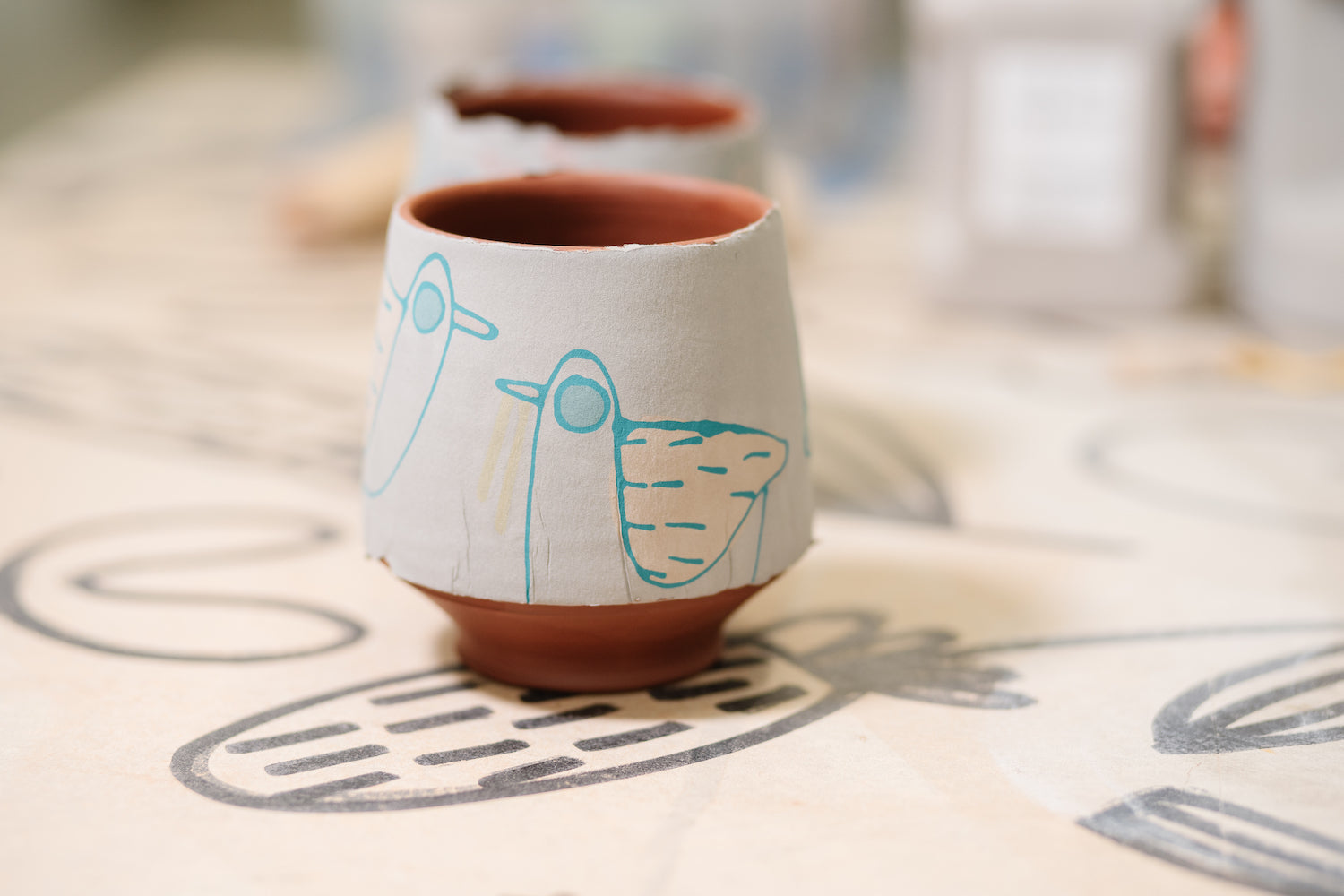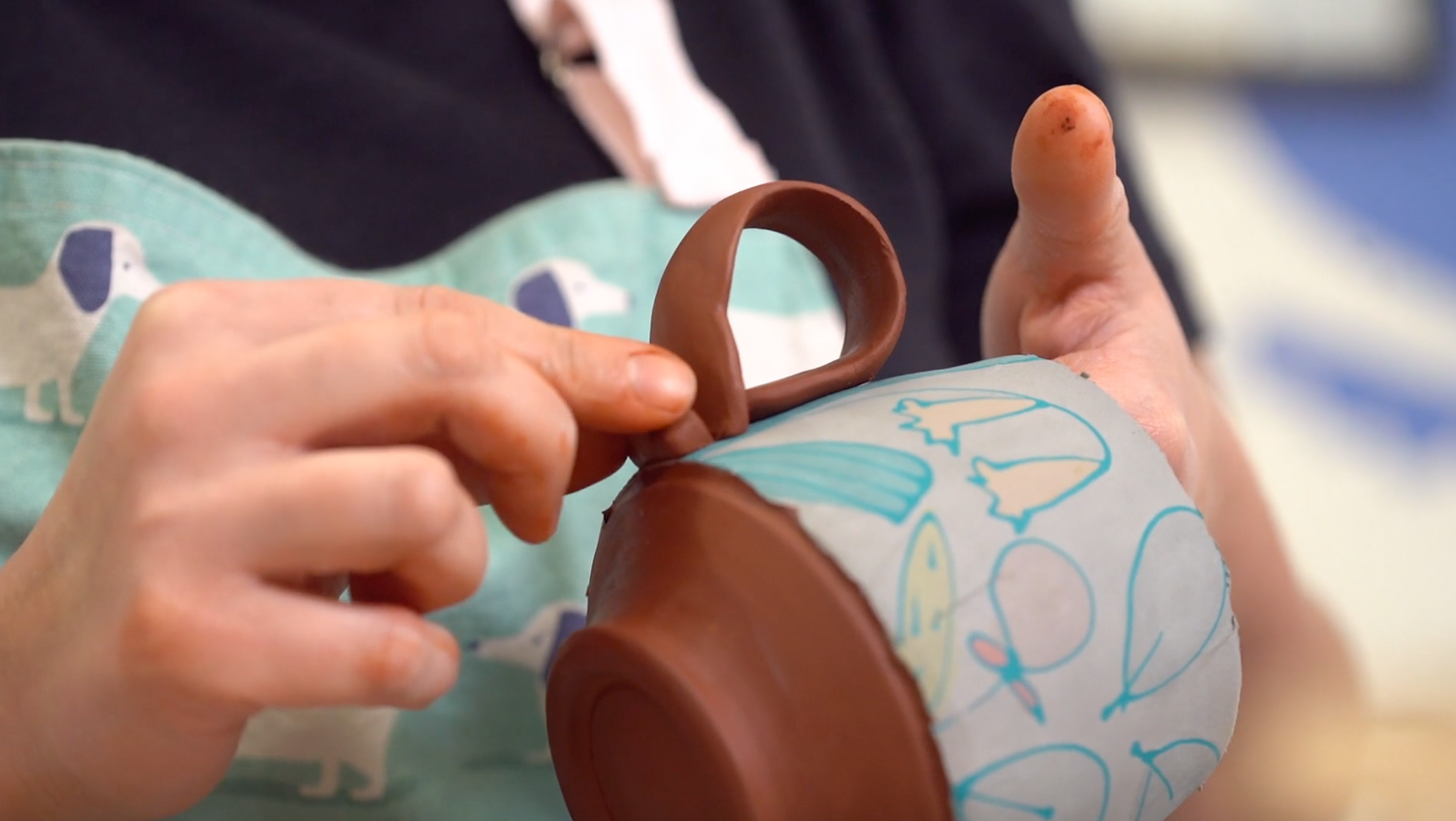
My process combines drawing, printmaking, painting, and ceramics to create layered, graphic surfaces on clay.
I start with a drawing, which I turn into a screenprint. Using underglaze adjusted to an ink-like consistency, I screenprint the outlines onto newsprint paper. This is how I achieve the crisp lines that define much of my imagery. I then fill in the designs by hand with custom-mixed colored slips, building up the image from foreground to background.
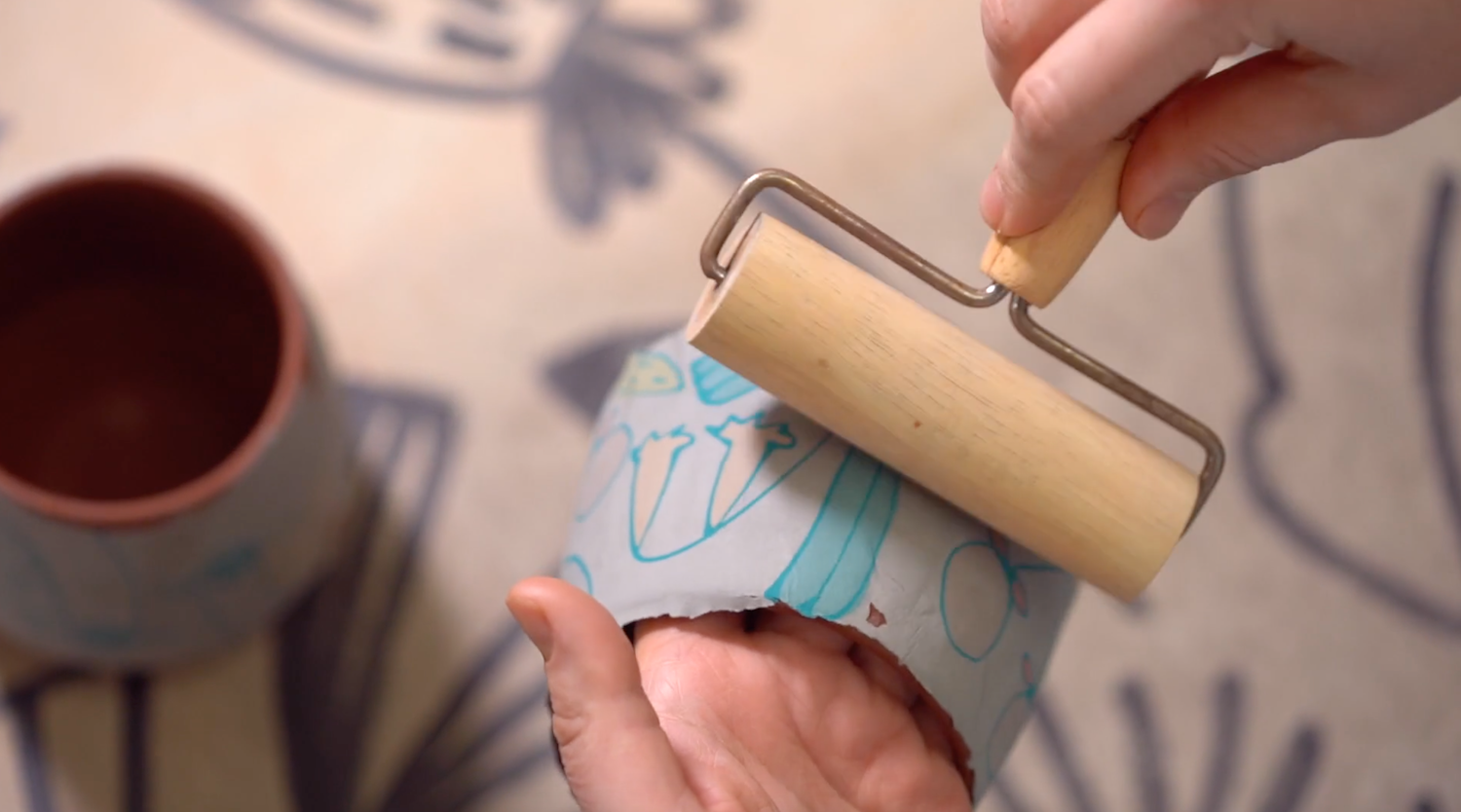
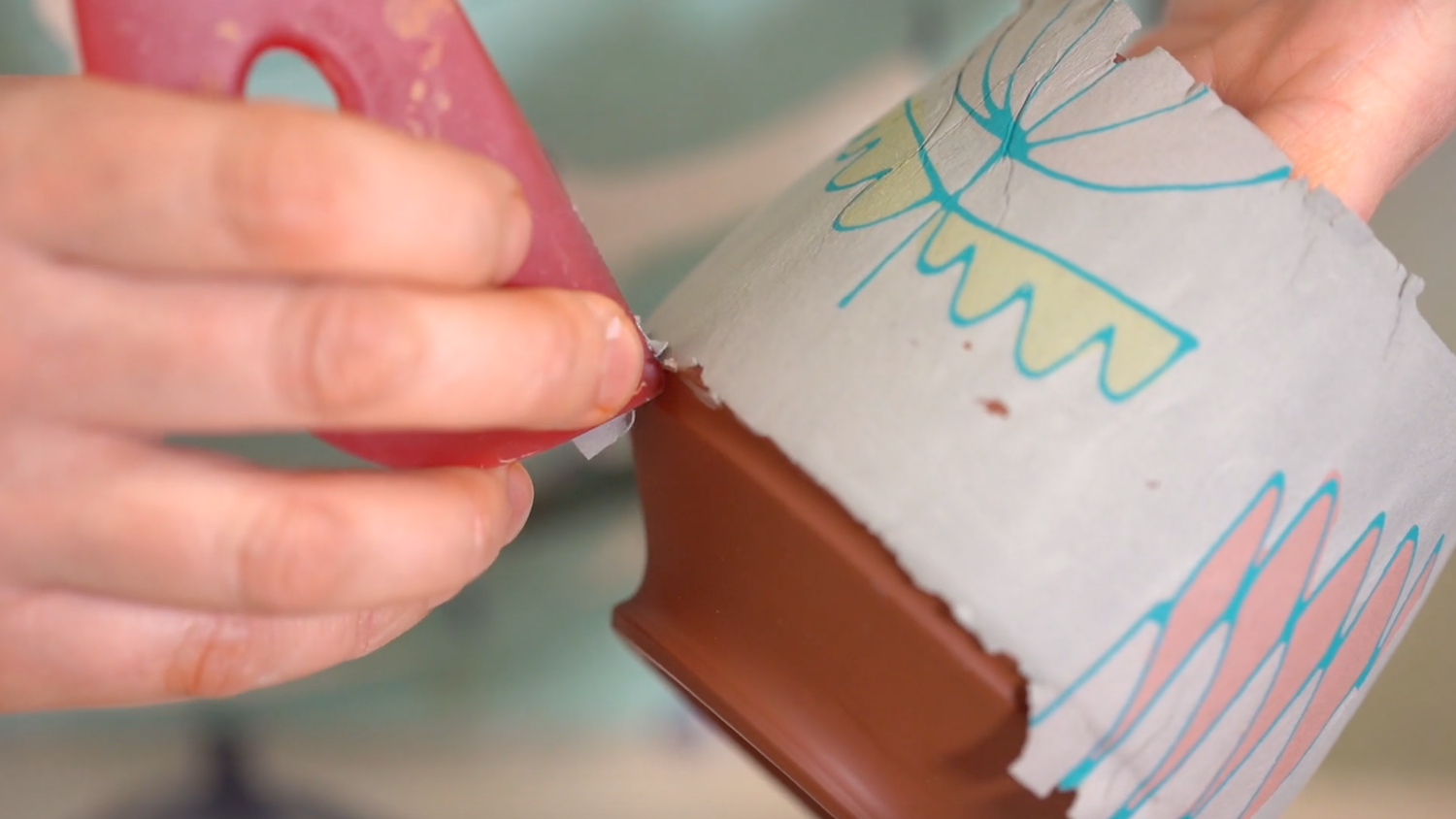
When the slip-covered paper reaches just the right level of dampness, I lay it onto the clay and use a rib to squeegee and compress the image onto the surface. As I peel away the paper, the underglaze and slips release onto the clay, leaving behind a one-time transfer.
The process creates a surface that is both graphic and unpredictable. Folds and wrinkles in the paper, along with areas where the image doesn't fully transfer, leave marks that resemble scratched or weathered paint on metal. Rather than aiming for a perfectly uniform print, I embrace these variations as part of the work. Each layer builds on the last, creating depth, texture, and traces of the process itself.
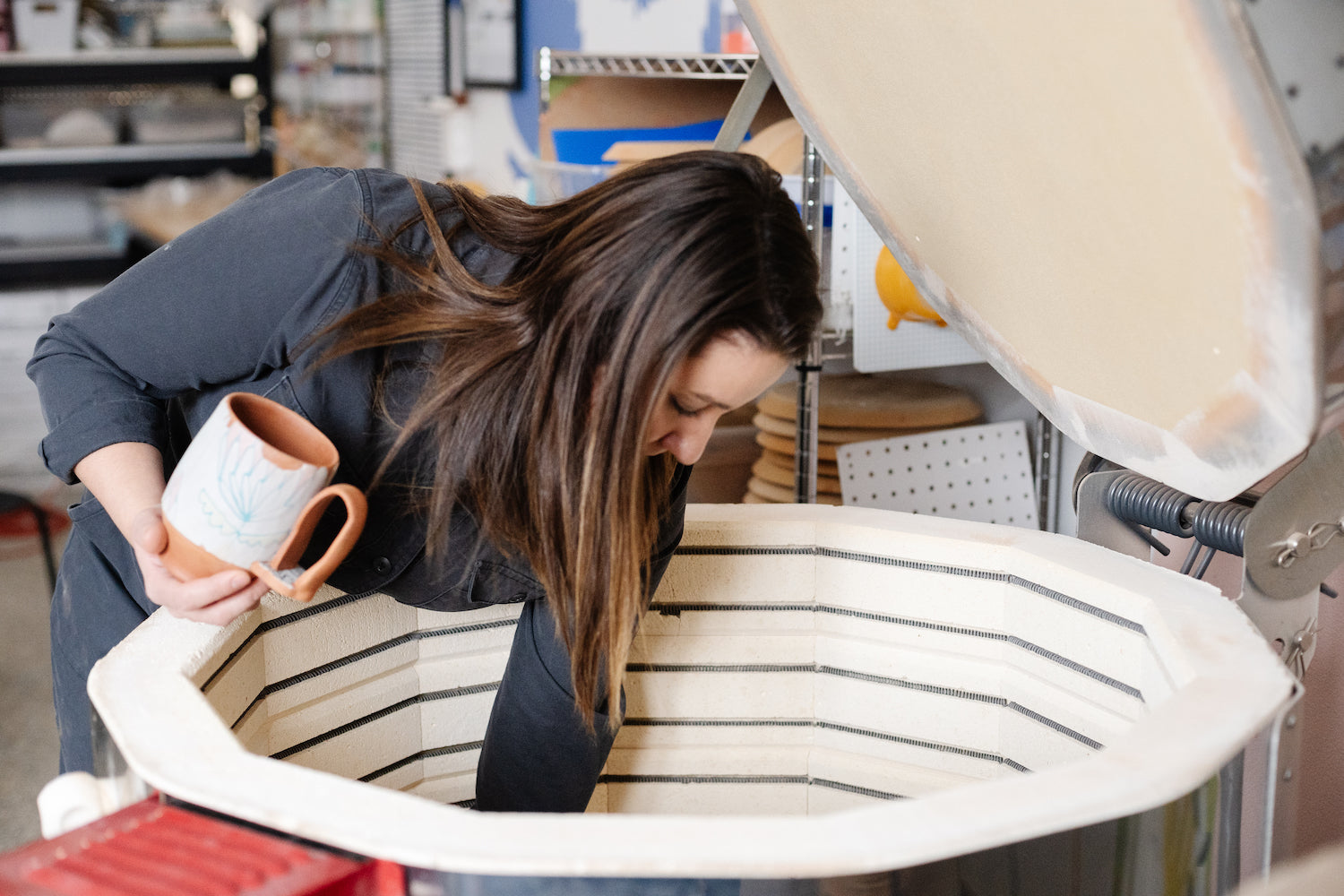
My pieces combine these layered images with exposed red clay. I work with both slab-built and slip-cast forms, applying all decoration during the greenware stage. After the first firing, I wet-sand each piece to smooth the surface and remove uneven parts. I then pour or brush glaze onto select areas, leaving portions of the clay exposed.
Learn More
For a more detailed look at my process, read Drawn and Transferred, originally published in Pottery Making Illustrated, September/October 2018. Reprinted with permission from The American Ceramic Society.
I also teach online workshops that walk through my transfer process at your own pace.
Explore some of my favorite tools and supplies.
Made one-at-a-time in my Fargo studio.